
Jul 13, 2026Material Notes
Material Guide: What Makes Our Artificial Plants Look Real
From over-glued plastic stems to film-textured leaves and weighted cement pots, here is how we build greenery that fools the eye from three meters away.
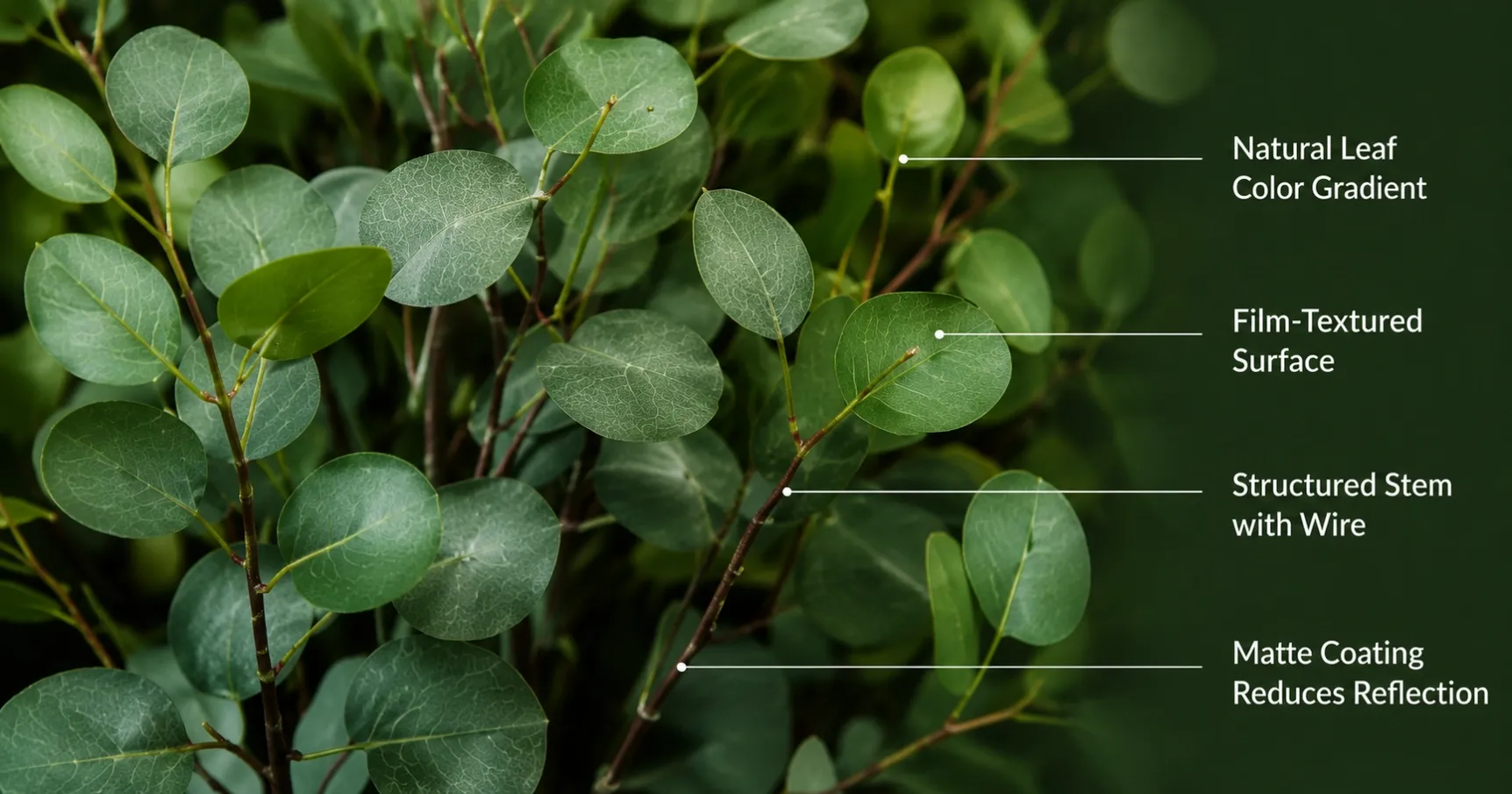
The difference between a cheap plastic plant and a premium artificial tree is not just price — it is the combination of materials, finishing techniques, and structural engineering. At Dongguan Haiwei Technology, we treat every leaf and stem as a small engineering project.
Stems: Structured Plastic with Internal Wiring
Our stems use high-grade PVC with embedded steel wire. This allows gentle bending during installation so the tree can lean naturally against a wall or spread outward in a planter. The plastic is over-glued to create a subtle bark texture that catches light realistically.
Leaves: Film-Textured with Color Gradients
We do not print leaf patterns. We mold them with film-textured surfaces that scatter light the way real leaves do. Each leaf has three color tones — deep green at the base, medium green at the center, and a lighter highlight along the vein. Under indoor lighting, this gradient prevents the flat, plastic shine that exposes cheap alternatives.
Pots: Cement and Ceramic for Stability
A tall Bird of Paradise or Travelers Palm needs a heavy base. We pair plants with cement or ceramic pots that weigh 3–8 kilograms depending on tree height. This prevents tipping in high-traffic hotel lobbies or windy terrace corners.
Assembly: Hand-Finishing After Machine Molding
Machine molding creates the basic shape. Our finishing team then adjusts leaf angles, trims excess adhesive, and applies a light matte coating to reduce surface reflection. This hand-finishing step is why our plants look different from mass-market alternatives.When your clients ask why the greenery looks so convincing, you can point to these four details. The materials are invisible, but the result is not.