
Jul 13, 2026Home Routines
5 Interior Design Trends Where Artificial Plants Deliver the Biggest Impact
Biophilic offices, minimalist hotel lobbies, retail show flats, and wellness spaces are driving demand for lifelike artificial greenery. Here is where to place your investment.
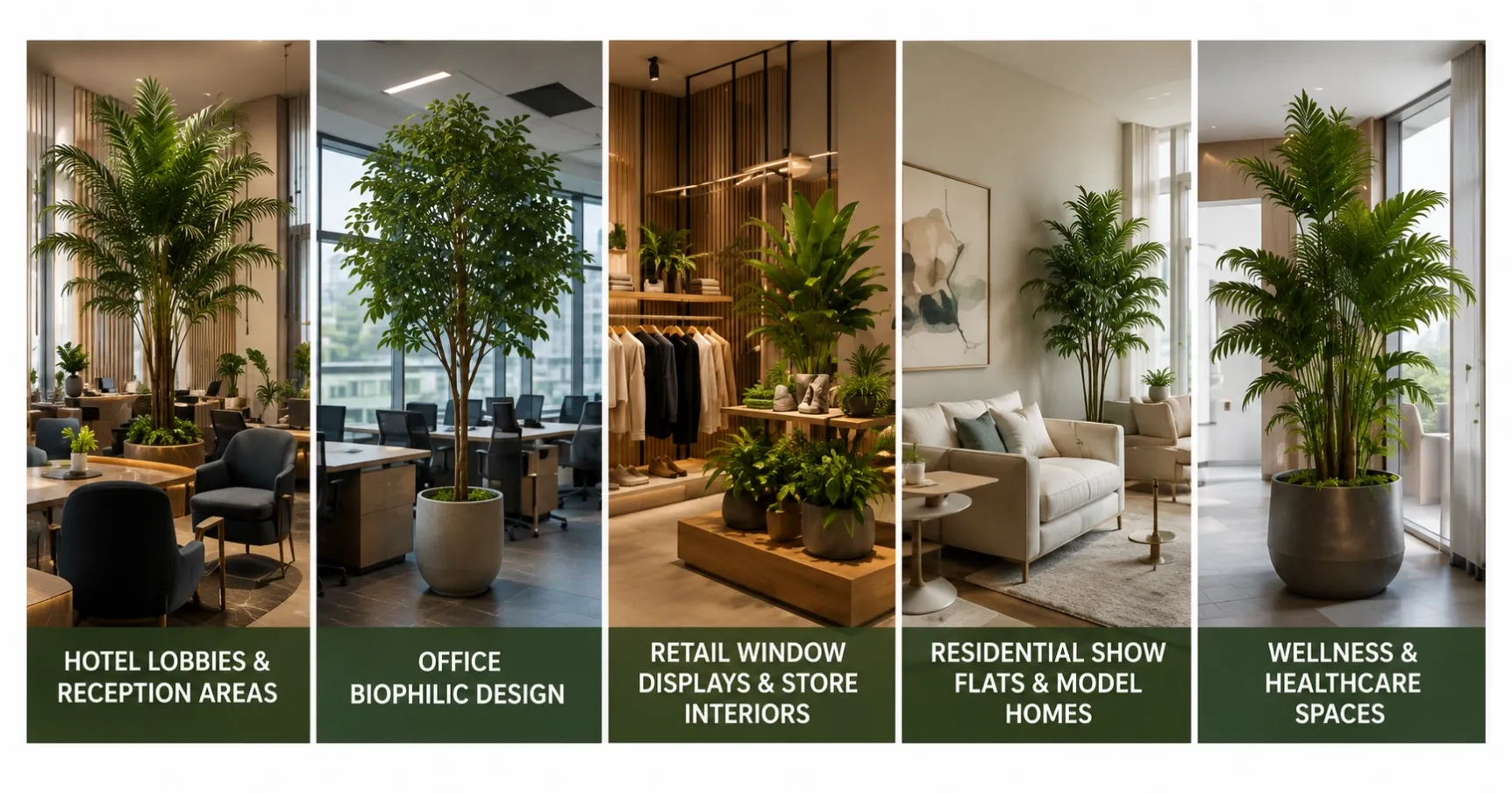
Interior designers and property developers increasingly use artificial plants not because they cannot maintain real ones, but because the right fake plant delivers consistent visual impact without ongoing maintenance costs. Here are five spaces where our wholesale partners see the strongest return.
1. Hotel Lobbies and Reception Areas
A 2-meter Travelers Palm or Bird of Paradise instantly signals luxury without the daily watering, leaf pruning, and soil replacement that real tropical plants demand. Hotels in dry climates or seasonal resorts particularly benefit — the plant looks the same in January and July.
2. Office Biophilic Design
The biophilic design movement demands natural elements in workspaces. Small succulent arrangements on desks, mid-sized Monstera plants in meeting rooms, and tall Fiddle Leaf Figs in corridors reduce the sterile feel of glass-and-steel interiors. Artificial versions eliminate the risk of employee allergies or plant death during holiday shutdowns.
3. Retail Window Displays and Store Interiors
Fast-fashion retailers refresh window displays every four to six weeks. Artificial plants allow seasonal theming — spring cherry blossoms, summer tropical foliage, autumn eucalyptus — without the cost of buying and discarding real plants monthly. The same plant set rotates across campaigns.
4. Residential Show Flats and Model Homes
Property developers need picture-perfect interiors for every viewing. Real plants wilt between showings. Artificial greenery stays camera-ready, allows flexible placement for photography, and moves with the sales team to the next development project.
5. Wellness and Spa Environments
Spas and wellness centers use greenery to create calm. Humidity and temperature fluctuations in treatment rooms kill real plants quickly. Artificial alternatives maintain the visual atmosphere without fungal issues or root rot.If you serve any of these sectors, artificial plants are not a compromise. They are a strategic tool that controls cost, maintains appearance, and scales across multiple projects.